
Everyday Balance and Mobility: Joint‑Friendly Moves for Confident Daily Life
Walking across a room, stepping off a curb, or rising from a chair can feel more demanding as years go by. Muscles, joints, and balance systems all change, yet small adjustments in how you move can protect comfort, support independence, and restore steadier ease to everyday life.
This story is part of DailySeekers's practical reading library across everyday topics.
Why Ordinary Actions Start To Feel Unsteady
For many people, the first hint of change appears in the bathroom, hallway, or kitchen. Bending to wash your feet, turning quickly to grab a bag, stepping into the shower, or standing on one leg to pull on pants may start to feel shaky or tiring.
This can signal that some areas have become stiff, while others work overtime. When one joint does not move well, nearby joints may twist, tilt, or strain to “help out.” Over time this can create soreness, tight muscles, or a sense that your body is not moving as one coordinated unit.
Strength around the hips, knees, and ankles also plays a big role. When these muscles lose power or endurance, they offer less support to the joints. Getting up from a chair, climbing a step, or walking on uneven ground can feel heavier or less controlled.
As movement feels harder, it is natural to cut back. A short walk becomes a shorter one, stairs are left for another time, and bending or reaching is delayed. Less movement leads to more stiffness and weaker muscles, which then make the same movements feel even harder. Confidence drops, and tasks that once felt automatic begin to demand more thought.
Gentle, regular activity can interrupt this pattern. Walking, easy cycling, time in the water, simple strength work, stretching, and basic balance drills help joints stay mobile and muscles stay supportive. The aim is not to push through pain or chase intense workouts, but to respond to your body’s messages with small, steady steps that keep daily motion feeling manageable.
Technique Tweaks For Standing, Walking, And Stairs
Small changes in setup often do more for comfort and steadiness than pushing harder. A few extra seconds of preparation before you move can shift how your body feels.
Before you start walking, pause in standing. Soften your knees instead of locking them straight. Imagine your weight spread through your whole foot: heel, base of the big toe, base of the little toe. This wider “triangle” of support usually feels more grounded than hanging back in the heels.
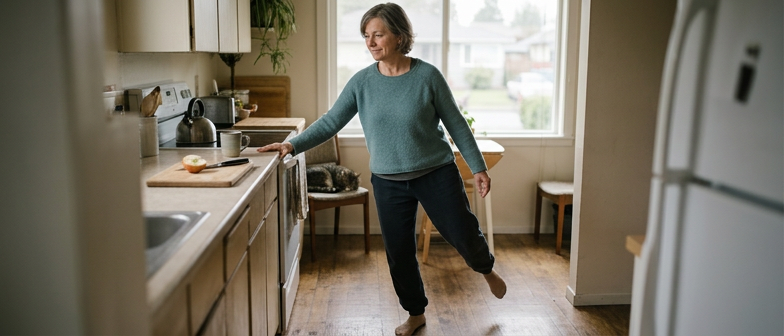
If balance feels uncertain, let one hand lightly rest on a counter or other sturdy surface as a backup plan rather than a full grab. From there, slowly shift your weight from one foot to the other and notice how your body lines up over each leg. When you first rise from a chair, stand still for a moment before taking your first step so your body has time to organize.
For walking, think “slow and placed” rather than “big and fast.” Gently lift each foot a bit higher than usual and set it straight ahead, as if stepping along a narrow line in a hallway. This encourages more controlled work at the hips and ankles and can lessen that wobbly feeling. Light contact with a wall or rail can make practice feel safer.
On stairs, try to make the leg already on the step your main “engine.” Going up, place your whole foot on the step, lean your body slightly forward, and let the back leg follow. Going down, set your foot near the front edge of the step and lower your body like a slow, mini squat instead of dropping quickly.
Practicing step-ups or controlled step-downs onto a low step in a safe spot can build strength and trust in your legs that carries over to everyday stair use.
| Situation in daily life | Small technical change that may help | Extra support idea |
|---|---|---|
| Standing from a low seat | Bring feet under knees and lean torso slightly forward before rising | Keep a table or counter nearby for light fingertip support |
| Turning in a tight space | Take two or three small steps instead of a fast pivot on one foot | Lightly touch a wall or chair back while you turn |
| Stepping off a curb | Look where you will place your foot and lift the front leg a bit higher | Rest one hand on a companion’s arm or a stable object if available |
Short Home Routines For Strength And Steadiness
Building strength without a full gym setup
A practical routine at home often works best when it feels short and repeatable. Think of these sessions as “movement snacks” that fit between daily tasks. Simple moves such as bodyweight squats, sit-to-stands, and glute bridges help legs and hips stay strong, which in turn supports more secure walking and standing.
Sit-to-stands from a sturdy chair are a useful starting point. Place your feet under your knees, lean slightly forward from the hips, stand up with control, then slowly sit back down. This rehearses the same pattern you use when rising from a sofa, bed, or car seat. For extra comfort and safety, keep a table or counter nearby for light support.
On a mat or firm surface, glute bridges can focus load into the hips and core without much direct strain on the knees. Lying on your back with knees bent, press your feet into the floor and gently lift your hips. Pause for a breath at the top, then lower slowly. Aim for a smooth, controlled motion rather than a dramatic lift.
These kinds of strength pieces do not have to take long. A few controlled repetitions, done most days of the week, can gradually make everyday tasks feel less demanding.
Training steadiness with small balance drills
Low-impact balance work often fits easily into the home environment. Standing marches are one friendly option. While facing the back of a chair, hold lightly, then lift one knee as if marching, lower it, and switch sides. Slow, steady steps encourage your brain and body to coordinate without rushing.
Another option is a “heel-to-toe” walk along a clear stretch of hallway or kitchen counter. Place one foot directly in front of the other, heel touching the toes of the foot behind. Keep fingertips resting on the surface so you always have a safe contact point. These small challenges teach ankles, knees, and hips to respond smoothly to shifting weight.
You can also weave these drills into daily life: a few standing marches while waiting for the kettle, or a short heel-to-toe walk each time you pass a particular counter. Short, frequent practice often feels less intimidating than setting aside a long block of time.
| Home drill | Main focus | When it often fits well |
|---|---|---|
| Sit-to-stands | Strength around hips and thighs | Before or after regular sitting periods |
| Standing marches | Balance and control on one leg | While waiting in the kitchen or bathroom |
| Heel-to-toe walk | Coordination of ankles, knees, and hips | Along a clear hallway or countertop route |
Respecting Limits, Reading Signals, And Seeking Support
Working with your body instead of against it
Changes in strength and steadiness usually respond better to steady, graded progress than to sudden jumps in effort. Start with movements you can control well and then adjust one or two elements over time: a little more range, a few more repetitions, or a slightly more challenging surface.
A helpful self-check is whether the day’s work feels “challenging but manageable” rather than like a test. If you finish an exercise feeling slightly tired but still stable and in control of your breathing, you are probably in a safe zone. If you notice yourself holding your breath, gripping with your hands, or wobbling more with each attempt, it may be a sign to dial things back.
Using pain and discomfort as information
Pain and discomfort can act as a guide. Mild stiffness or a “rusty” feeling that settles soon after you stop moving often acts like a yellow light: proceed with attention, maybe with a smaller range of motion, slower speed, or less weight. Many guides suggest pausing when discomfort or fatigue clearly changes how you move, instead of pushing through.
More intense warning signs include sharp or sudden pain, pain that makes you limp, or discomfort that remains strong the following day. Those are closer to red lights: time to stop that particular exercise, choose an easier version, and consider getting advice.
Support from a qualified professional can be especially useful when discomfort keeps returning in the same area, when fear leads you to avoid everyday tasks, or when your steadiness seems to decline over a short period. Tailored guidance can help you adjust your plan so daily movement feels safer and more predictable, without needing to give up being active.
Paying attention to these signals, combining them with small technical adjustments, and making space for short strength and balance routines at home can all contribute to moving through daily life with more ease and assurance.
Q&A – Everyday Balance And Mobility
-
How can Everyday Balance And Mobility be improved without exhausting workouts?
Everyday balance and mobility improve most when you sneak small bouts of movement into your normal day, like practicing controlled sit‑to‑stands, slow hallway walks, or brief heel raises at the counter. Keeping sessions short, frequent, and comfortable helps your body adapt while protecting joints and avoiding overwhelming fatigue. -
What makes a movement truly Joint Friendly Movement for older adults?
Joint friendly movement keeps impact low, ranges comfortable, and alignment easy to control. Think of slow stepping, supported squats to a chair, or water exercise rather than deep lunges or jumping. Using sturdy support, soft surfaces, and shoes with grip further protects sensitive joints while still building useful strength. -
Which simple behaviors build Fall Prevention Awareness at home?
Effective fall prevention awareness includes scanning floors for clutter, ensuring good lighting, and noticing when you feel rushed or distracted before moving. Turning more slowly, using handrails consistently, and planning extra time for stairs or curbs combine with regular strength and balance practice to lower everyday fall risk. -
How often should a Gentle Stretch Routine be done for Active Aging Support?
A gentle stretch routine most often helps when repeated almost daily, but in small, comfortable doses that never push into sharp pain. Targeting hips, calves, and chest with slow breathing encourages circulation and easier posture, supporting active aging by making walking, reaching, and turning feel smoother and less stiff. -
Why are Functional Strength Basics important for Daily Confidence In Movement?
Functional strength basics build the exact skills you rely on daily, such as standing up, climbing steps, or turning while carrying objects. Practicing controlled sit‑to‑stands, supported step‑ups, and light carries teaches your muscles and balance systems to coordinate reliably, boosting confidence that your body will respond when needed.