
Golf Course Etiquette Basics from Tee Time to the 18Th Green
Golf course etiquette helps rounds feel smoother, safer, and more enjoyable for every group on the course. This guide highlights practical habits—from tee time preparation and pace of play to putting green and golf cart etiquette—that protect the course and show courtesy to other players.
This story is part of DailySeekers's practical reading library across everyday topics.
Why Golf Course Etiquette Matters
Golf course etiquette is the shared set of habits and unwritten rules that help people use the course safely and respectfully. It supports the formal Rules of Golf by shaping how players move, care for the turf, and interact with one another. When golfers follow basic courtesy, such as staying aware of other groups and keeping the grounds in good condition, it reduces the risk of accidents and makes it easier for everyone to concentrate. Simple actions like waiting until a fairway is clear before hitting or standing outside a player’s line of sight create a calmer, more predictable environment.
This kind of etiquette also matters because it balances enjoyment and fairness among players with different skill levels and expectations. Consistent behavior helps maintain a reasonable pace, protects greens and tees from avoidable damage, and shows respect for the staff who maintain the course. Shared norms give groups a starting point for resolving small conflicts, especially on busy days when people may interpret courtesy differently. The rest of this article builds on this foundation, outlining how thoughtful habits around preparation, movement, and course care can make each round more pleasant for both you and the groups around you.
Tee Time Preparation and Starting the Round
Thoughtful preparation before a tee time is an important part of golf course etiquette and helps maintain an efficient pace of play. Players are expected to arrive early enough to check in, organize clubs and accessories, and warm up without holding up their group or those behind them. Many golfers plan to reach the course about half an hour before their time, adjusting for traffic and personal routines. Reviewing local rules, dress expectations, and cart policies in advance reduces delays at the counter. Packing balls, tees, a ball marker, a divot repair tool, and suitable clothing before leaving home makes it easier to walk straight to the practice area and then to the first tee on schedule.
When the group is called, each player should be ready so the round can begin smoothly and other groups are not kept waiting. Having a ball already marked, a glove on, a club chosen, and a simple pre-shot routine allows the first drive to be played promptly. Groups may agree on an order of play that feels comfortable, for example letting the most confident driver start, as long as this does not slow things down. Keeping voices low, silencing phones, and standing clear of another player’s line of sight or swing area shows courtesy and supports concentration and safety. If staff members adjust the starting order or ask a group to wait because of weather, maintenance, or course traffic, following their instructions helps everyone share the course fairly.
| Checklist Item | Purpose for Pace of Play | Etiquette Focus |
|---|---|---|
| Arrive early at the course | Avoid rushed starts | Respect other tee times |
| Confirm local rules and policies | Prevent last-minute questions | Follow course-specific guidance |
| Organize clubs and accessories | Reduce searching on the tee | Be ready when called |
| Warm up before the tee time | Start swings in rhythm | Limit delays on first shots |
| Silence phones in advance | Prevent stoppages mid-hole | Maintain quiet surroundings |
| Agree who keeps the scorecard | Streamline first-tee routine | Support group coordination |
Check-in, practice, and pre-round conduct
Effective tee time preparation means arriving early enough to park, check in, and reach the practice area without delaying others. At the pro shop, confirm your time, pay fees, and listen for local guidance such as cart limits, pace expectations, or temporary rules. Show courtesy by waiting your turn, speaking respectfully if something is unclear, and accepting policies even when they differ from other courses. On the range and practice green, leave space around other players, avoid unsafe positions, and use only designated hitting areas. Before walking to the first tee, organize clubs, balls, tees, and markers, silence your phone, and agree who will keep the scorecard so your group can start smoothly without sorting equipment while others wait.
Managing Golf Pace of Play on the Course
Managing pace of play is a core part of golf course etiquette because it affects everyone on the course, from the first tee to the final green. A steady rhythm keeps rounds enjoyable and helps the course run on schedule, but it does not mean rushing or trying shots beyond your ability. Many groups move efficiently by walking briskly between shots, limiting practice swings, and being ready to play when it is their turn. Courses may post target times for each hole, yet real conditions such as weather, tournament play, or maintenance can slow things down, so players need to balance courtesy with realistic expectations.
One of the most practical ways to support a good pace is planning your shot while others are playing and using a form of ready golf when it is safe and agreed upon. This includes checking yardages, selecting a club, and visualizing the shot before you reach your ball, so you can play promptly without feeling rushed. On the green, players can read putts in advance when it does not disturb another player’s line and leave bags, pushcarts, or golf carts on the side of the green that leads toward the next tee. Because some golfers, especially beginners, may need more time, groups often discuss expectations at the first tee to avoid misunderstandings later in the round.
Allowing faster groups to play through is a traditional way to maintain flow when your group is moving more slowly, especially on busy days. When a clear gap opens in front of you and another group is waiting behind, it is usually courteous to invite them to play ahead at the next safe opportunity, such as a par-three tee or after completing a hole. This works best when everyone communicates clearly and places safety above speed, since mis-hit shots and shared fairways can make play-throughs tricky. Even with polite cooperation, overall pace is still shaped by factors outside a single group’s control, including course layout, the number of players on the schedule, and restrictions such as cart-path-only holes after heavy rain.
Sharing the course with other groups
On a busy course, be aware of groups ahead and behind so play moves smoothly and safely. If it is clear your group is delaying others and there is a safe gap, invite the faster group to play through and be ready to continue without further delay. Avoid crowding the group in front or hitting while they are still within range; wait until the landing area is fully clear. When a marshal comments on spacing or timing, treat the guidance as neutral, ask brief questions if needed, and adjust your group’s rhythm rather than arguing.
Putting Green Etiquette and Course Care
On the putting green, etiquette focuses on fairness, safety, and concentration. Traditionally, the player farthest from the hole putts first, but many groups now agree on a ready golf approach when it is safe and does not disturb another player’s line. Players should mark and lift a ball that might interfere with a stroke and avoid stepping on or across someone else’s putting line. Moving quietly, standing outside a competitor’s direct line of vision, and limiting conversation while another player is putting all help maintain a calm and focused setting.
Protecting the putting surface is a key part of golf course etiquette. Golfers are expected to walk carefully, especially near the hole, and avoid dragging or twisting spikes or clubs on the green. Current rules generally allow players to repair damage such as ball marks, old plugs, and spike marks before putting, but these repairs should be done promptly so play is not delayed. When handling the flagstick, it is courteous to lower and place it gently, avoid dropping it on the green, and set it where it will not cast a distracting shadow or block another player’s line.
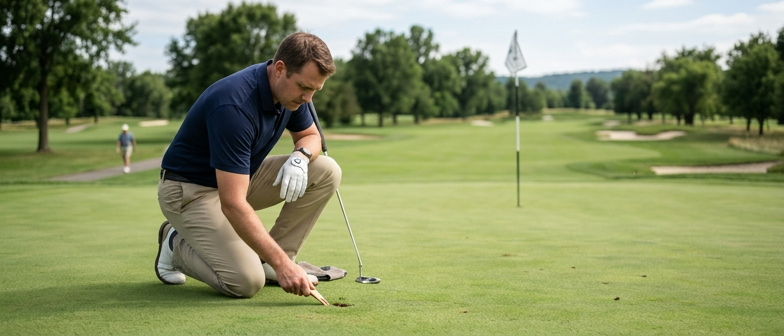
Repairing ball marks correctly is one of the most practical ways to care for the course and keep greens rolling consistently. A well-repaired mark usually heals more quickly, but the repair should be done by lifting and pushing turf toward the center rather than prying it upward, which can cause further damage. Even with good habits, not every mark can be restored perfectly, and conditions such as weather, play volume, and maintenance all influence green quality. Fixing your own impact and any obvious damage you encounter helps provide a fair surface for the groups that follow.
Q&A
-
Why is golf etiquette important beyond the Rules of Golf?
It prevents accidents, protects turf, and keeps rounds moving. Clear habits about where to stand, when to play, and how to treat other groups help everyone stay focused and comfortable. -
When should I arrive for my tee time?
Arrive about 30 minutes early. This allows time to park, check in, warm up briefly, and sort your clubs so you start on time and do not delay the next group. -
How can I help maintain a good pace of play?
Move promptly between shots, limit practice swings, and be ready when it is your turn. If your group falls behind and it is clearly safe, invite a faster group to play through. -
What are key points of putting green etiquette?
Mark any ball that might interfere, avoid stepping on another player’s line, and stay quiet. Stand out of the putter’s line of sight and keep movement and talking to a minimum. -
What is good golf cart and course care etiquette?
Follow cart path rules, avoid wet or fragile areas, and park off to the side of greens and tees. Drive slowly near others, keep noise low, and repair ball marks or divots promptly.